Remote work is no longer an experiment. Since March 2020, the workplace has been reshaped in ways few of us could have predicted. What started as a temporary response to lockdowns has become a long-term reality: hybrid and remote-first teams are here to stay. Yet many organizations still wrestle with how to keep employees engaged, connected, and aligned outside the office.
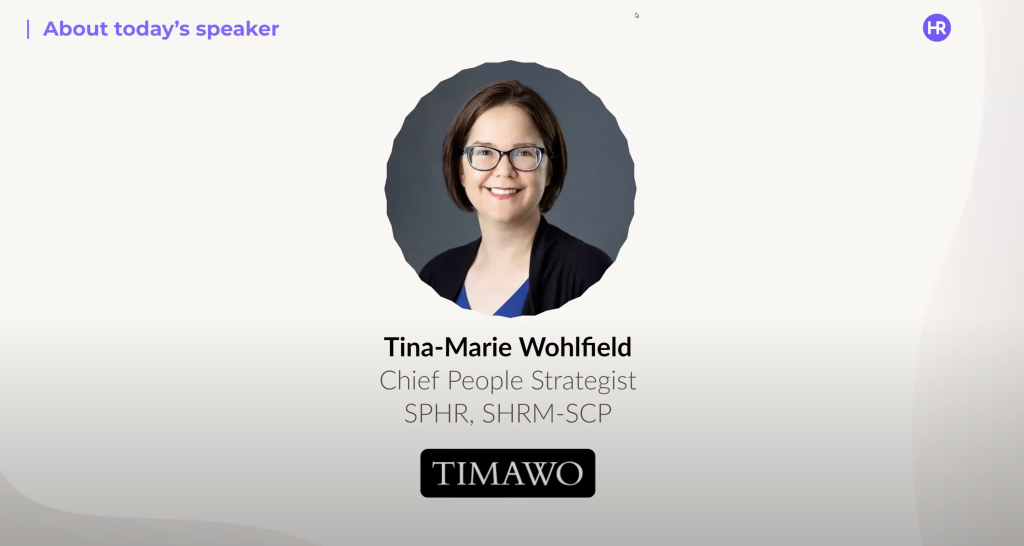
In a recent webinar hosted by HR Chief and People People, sponsored by CultureBot, HR strategist and author Tina Marie Wohlfield shared powerful insights on what it takes to build thriving remote workplaces. Drawing on 25 years of HR leadership, her message was clear: work is not a place — it’s an experience. Organizations that recognize this, and create intentional systems around people, policies, and tools, will be best positioned for the future of work .
This webinar was done in partnership with HR Chief – a community dedicated to improving the Human Resources/People Operations space, who strives to make work engaging, equitable, and impactful. In this session, you’ll learn how to:
- Connect Talent, Training, and Tools for a thriving remote workforce
- Break the stigma of remote work
- Adapt policies to fuel inclusion, creativity, and productivity
From the “Junk Drawer” to a Clear Playbook
Tina Marie described how many organizations approached remote work in 2020: like rummaging through a kitchen junk drawer. Leaders grabbed whatever tools they could — Zoom, Slack, Teams, email — and pieced them together without a long-term plan. While this quick response helped businesses survive, it left lingering challenges:
- Disconnected policies
- Inconsistent expectations
- Frustrated employees unsure of “how remote works here”
Three years later, employees are no longer treating remote work as a temporary fix. Many have built their careers, families, and daily rhythms around it. As Tina put it, “remote isn’t going away — it’s now ingrained into the workforce.” The junk drawer approach won’t cut it anymore. What’s needed is a remote work playbook: a clear, intentional framework that defines expectations, tools, and cultural practices for how work gets done.
Busting the Myths About Remote Work
Despite the data, myths persist about remote work. Some executives insist “nobody wants to work anymore” or “culture only exists in the office.” Tina Marie challenged these narratives head-on:
- Myth 1: Remote workers are less engaged. Gallup data shows the opposite. In fact, the more rigidly employees are forced into the office, the less engaged they tend to be. Hybrid and flexible arrangements drive higher engagement than strict on-site policies .
- Myth 2: Culture is tied to a building. Culture isn’t your office address or your wall of values posters. It’s the feeling of belonging, inclusion, and shared purpose. If you can’t build culture remotely, you probably don’t have a strong culture in the office either.
- Myth 3: Remote means unproductive. Most employees report being more productive when remote, thanks to fewer distractions and regained commute time. Leaders need to measure productivity by outcomes, not hours seen at a desk.
As Tina put it: “Work is not where it’s done — it’s how it’s done.”
What the Data Actually Says
Tina referenced multiple research sources, including Work From Home Research (a University of Chicago-led collaboration), which has tracked remote work data since 1965. Contrary to headlines about a “return to office,” the numbers show remarkable stability:
- Between Jan 2022 and March 2023, fully remote workers declined by just 2.9% — hardly a mass shift back to office life.
- Roughly 30% of salaried employees are hybrid, with another 10–20% fully remote.
- Hourly workers, whose roles often require physical presence, remain largely on-site — but that’s driven by job function, not preference .
The takeaway? Remote work is not a fad, and it’s not in sharp decline. It’s a permanent feature of the labor market. The real question is how organizations adapt.
Talent, Training, and Tools: A Framework for Thriving Remote Work
Tina outlined a three-part framework for building successful remote organizations: Talent, Training, and Tools.
1. Talent: Listen and Adapt
Employees’ needs vary. Some thrive in quiet home offices, others need social energy. Some require flexibility for childcare or commuting burdens, while others prefer clear separation between home and work.
The key is asking:
- What do employees need to feel connected?
- Where do they do their best work?
- How can flexibility enhance, not hinder, performance?
Organizations that listen and respond to these needs attract and retain stronger talent.
2. Training: Set Clear Expectations
Remote work fails when expectations are fuzzy. Leaders need to train teams on:
- What “remote” means in your organization
- How to use collaboration tools
- When responsiveness is expected — and when it isn’t
- How to build inclusion in hybrid meetings
Without this clarity, employees default to assumptions from past employers — leading to frustration and inconsistency.
3. Tools: Make Connection Easy
The tools you choose shape your culture. Slack, Teams, and Zoom aren’t just utilities; they’re the new water cooler. Tools like CultureBot enhance these platforms by automating celebrations, kudos, and team rituals. Done right, tools don’t replace culture — they amplify it.
Building Connection and Culture at a Distance
One of Tina’s strongest points was that connection doesn’t have to vanish outside the office. With intention, it can flourish:
- Start meetings with organic conversation: “What’s for lunch today?”
- Use visual cues (like coffee mugs or pets) as conversation starters.
- Celebrate birthdays, anniversaries, and kudos publicly.
- Leverage apps like CultureBot to make recognition effortless.
Remote culture is about creating moments of belonging — both structured (celebrations, surveys, shoutouts) and spontaneous (inside jokes, shared wins).
Overcoming Leadership Resistance
A recurring challenge: CEOs who resist remote because “that’s not how we did it.” Tina urged HR leaders to respond with data + empathy:
- Present survey results showing employee preferences.
- Share engagement metrics tied to flexibility.
- Reframe productivity around outcomes.
- Coach leaders through their trust issues with remote work.
Sometimes resistance comes from personal inconvenience — like a leader who said he needed employees in the office “in case I need a fax.” These moments highlight the need to modernize both tools and mindsets.
Practical Tips for HR Leaders
To wrap up, Tina shared several actionable recommendations:
- Define your version of remote. Don’t assume employees know the rules. Write them down.
- Build opt-in flexibility. Not every role can be remote — but where possible, let employees choose.
- Measure what matters. Focus on output, not “butts in seats.”
- Create organic connections. Recognition, humor, and human moments matter more than ever.
- Invest in the right tools. Don’t overload on tech. Choose solutions that reduce friction and enhance culture.
The Future of Remote Work
Remote work isn’t an emergency response anymore — it’s the fabric of modern work. For Gen Z entering the workforce, digital collaboration is second nature. For seasoned professionals, flexibility is now a top driver of engagement and retention.
As Tina put it: “Culture isn’t an office. It’s a feeling.” Organizations that embrace this truth, invest in talent, training, and tools, and treat culture as a strategy — not an afterthought — will thrive in the hybrid era.