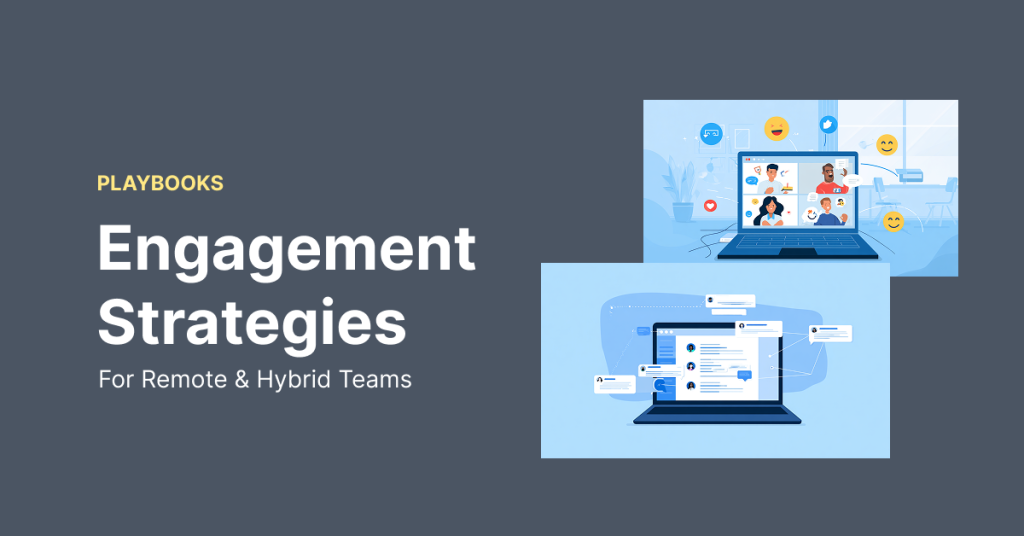
Employee engagement isn’t just an HR buzzword. It’s the foundation of how teams work, stay motivated, and perform over time.
In today’s remote and hybrid workplaces, it’s become both more challenging and more essential. Work looks different today. Hybrid teams, distributed employees, and the rise of Slack/Teams have reshaped how culture shows up. 30+ Million Americans are working remotely. And while remote work is declining from the Covid highs, the number of “hybrid” workplaces and workers isn’t slowing down.
Research from Gallup shows that companies with highly engaged employees are 21% more profitable than those without. Now – read – that – again.
At the same time, trends like quiet quitting and high turnover reveal what happens when engagement slips: productivity drops, burnout rises, and culture weakens.
HR Professionals — and CEOs and Leaders of all stripes!! — need practical strategies that make engagement feel natural — not forced, faked, or fumbled.
This guide pulls together the latest insights, challenges, and proven strategies for building engagement in remote and hybrid environments. It combines the themes of recognition, communication, onboarding, leadership, and wellbeing into a practical playbook you can put into action right away.
What Employee Engagement Means in a Remote/Hybrid World
What is Employee Engagement really? Is it “job satisfaction?” Is it high eNPS scores? Is it giving team members good perks, a fun time, free lunch, learning and development opportunities, good performance management, and all of these sorts of things?
Patty McCord is the absolute best at explaining what engages a team members.
McCord was the Chief People Officer at Netflix. She’s the author of the company’s famous “culture deck,” and later authored one of my favorite “People” books: Powerful. And you know what McCord indexes on when she thinks about employee engagement?
She indexes on context.
Companies spend so much time and effort to incentive and measure performance, but they’ve failed to actually explain to all of their employees how their business actually runs.
This is a poignant point of view about “employee engagement.”
Organizations frequently want teams to be “engaged,” but they fail to answer this question: “engaged with what?”
The answer to this question has to be a desire for teams to be engaged in the business.
Leaders want team members connected with one another around a shared commitment and contribution to the business. “Engaged employees” feel invested in their work, their colleagues, and their company’s mission. They don’t just show up—they show up with purpose.
This article is going to talk about — and we love — workplace celebrations, intros, conversation starters, recognition, games, onboarding employee journeys, internal communications, and on and on. These things are all super important.
But McCord is right. They’re only really important when they’re aimed toward the goal of delivering connection and context to the team.
This is hard for any company, and especially hard when companies get big. The program metastasizes with remote and hybrid teams. Leaders must be intentional about creating new rituals and opportunities for this connection and context.
Current Challenges
Even the best leaders face headwinds when it comes to engagement. Remote and hybrid teams bring unique challenges that many organizations struggle to overcome:
- Disconnection and Isolation Without casual office interactions, employees can feel invisible or out of sync with their peers. This is the opposite of what it feels like to “feel heard,” which studies show make an employee almost 5x more likely to do their best work. Over time, this leads to loneliness and reduced morale.
- Burnout and Quiet Quitting Always-on digital work blurs the lines between personal and professional life. Many employees disengage quietly, doing the bare minimum to get by.
- Communication Breakdowns In distributed teams, messages get lost, meetings multiply, and clarity suffers. Employees who feel out of the loop are less likely to be engaged. In this study, 88% of remote employees struggle with miscommunication.
- Lack of Recognition Recognition that once happened in a meeting or at someone’s desk doesn’t naturally translate into remote settings. Without visible appreciation, employees question their impact.
- Managerial Overload Leaders are tasked with engagement but often lack tools, training, or bandwidth. Many organizations still treat engagement as an HR project rather than a shared leadership responsibility.
These challenges aren’t insurmountable—but they require rethinking engagement strategies, adapting them for digital-first work, and building new habits into daily workflows.
Why Engagement Pays Off
Let’s be real. Engagement isn’t just a “feel good” HR project. It’s a business lever.
Gallup’s above-cited research shows companies with highly engaged employees are 21% more profitable than their peers. Engaged employees stick around longer, contribute more, and make the workplace a better place to be. Disengaged employees? They drag the team down, erode culture, and churn out faster than you can replace them.
Here’s the payoff when you get engagement right:
- Productivity gains. Engaged employees don’t just do their job — they look for ways to improve, innovate, and help the team win.
- Retention boost. When people feel connected, recognized, and part of the mission, they’re less likely to update their LinkedIn profile.
- Healthier teams. Engagement reduces burnout. Teams with strong connections report higher wellbeing and lower stress.
- Culture reinforcement. Engagement is contagious. When people show up with energy and purpose, others catch it.
Bottom line: companies can’t afford disengagement. Engagement drives business outcomes, plain and simple.
Core Strategies To Boost Engagement
So how do you actually do it? How do you build engagement that doesn’t feel fake, forced, or like just another HR initiative? In this section, we explore concrete employee engagement strategies you can put into practice right away that deliver real context to your team, drive more connection, and bring spreadout, hybrid or remote teams closer.
1. Celebrate Moments That Matter
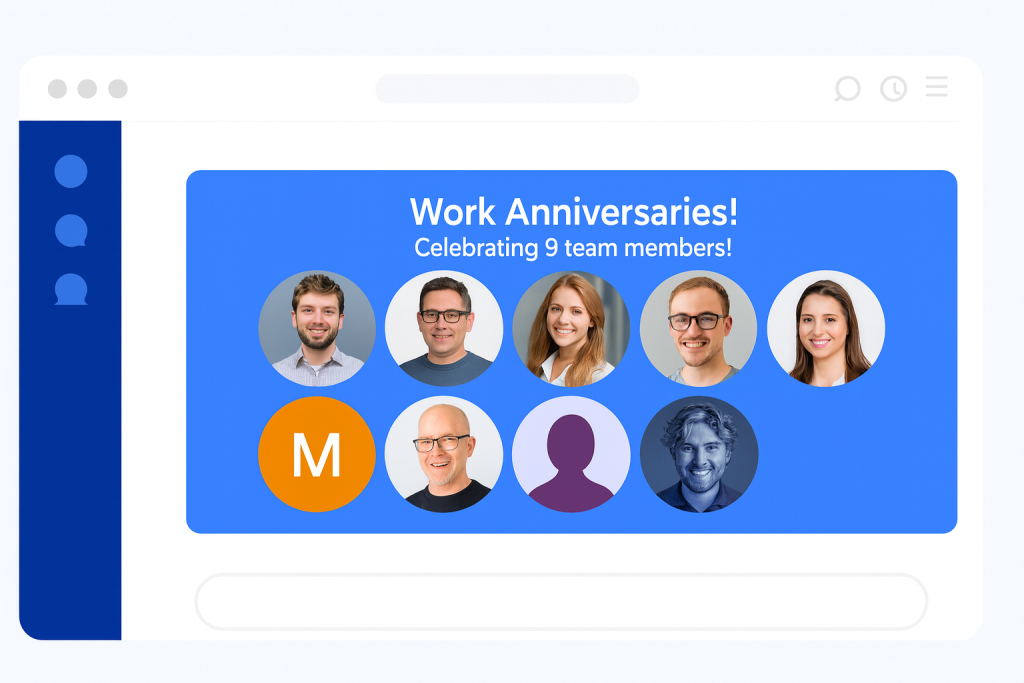
All teams and cultures are simply groups. Just like a friend group, a school alumni network, a congregation, or a political party, groups are defined by what they share together. For organizations, groups share milestones, and so in many ways, engaging cultures start at celebrating shared milestones and elevating those moments.
Milestones and what the team celebrates together really matters a lot. It’s important and impactful to elevate these celebrations into moments.
We wrote about celebrations and the Power of Moments in Work Anniversary Celebrations: Make It Special, and about work anniversaries specifically, I dug into the memory bank pulling together the Ways I Created Work Anniversary Moments as CEO.
Group Milestones and Why The Moment Matters
| The Milestone | Why The Moment Matters |
|---|---|
| Birthday | Birthdays aren’t “shared” moments for the group, but they are important milestones for individual group members. By recognizing an individual’s milestone, the group bonds together. |
| Work Anniversary | Work anniversaries are a big, big deal, and unlike birthdays (which are celebrated by the individual more personally), the work anniversary is something exclusively important and symbolic for the group. Don’t let these go unnoticed. The individual feels more included and connected to the group, and the group feels more validated by the individual’s achievement. |
| Goals / Milestones | Does your organization celebrate goals or milestones? It should. This gives everyone a feeling of shared accomplishment. Our 10th customer! Our first billion dollars! No matter how big or small the milestone, a milestone is an amazing moment to celebrate and elevate. |
| Group History | Celebrating group history helps the team feel better connected and helps everyone see and feel how far they’ve come. When people feel like they’ve come far together, they are more motivated to keep going! And when people understand their family’s or organization’s history, they are happier. Celebrate the company’s anniversary. Celebrate the anniversary of the first financing round. Celebrate the day you landed that first big customer. |
| Awareness Days | Groups are full of diverse individuals with different backgrounds, themselves part of a variety of different groups. Celebrating holidays, diversity and awareness days, and the like, helps people bring more of themselves to their working group(s), and this has the effect of bonding the team together. |
How To Celebrate Key Moments
Start by creating automations in your digital workplace platform (like Slack or Microsoft Teams). This is easy to do and it assures that routine “celebrations” don’t slip through the cracks.
Start with simple basics like birthdays and work anniversaries. Then add layers: celebrate customer wins, team achievements, company history, and cultural moments like heritage months or awareness days.
Bring some humanity and personality back to celebrations as well by sprinkling in some “fun” – for those using Slack/Teams and CultureBot, we recommend adding your teammate’s faces to the celebrations. Small teams may have just one face and one name connected to a celebration. Big teams will need to create photo collages or celebrate weekly or monthly. See more about big team celebrations here: Milestone Celebrations Made Easy for Huge Teams.
For holidays and awareness/diversity days, you could easily go overboard with these – celebrating multiple per week. We recommend setting up just one or two each month. These are days like:
- international religion day
- international women’s day
- world mental health day
- earth day
- the begining of pride month
… and so many more! If you’re using CultureBot, you can select from a wonderful list of preset days, that come fully prepped with animate graphics. But even better, you can use CultureBot to truly customize and personalize these celebrations, graphics, and messages to fit your organization.
2. Recognize People Publicly
Next up we have a big one… how do you deliver on building up a culture of recognition?
Public recognition amplifies impact. A private “thank you” is good. A public shoutout is 10x better because it not only rewards the individual but also signals to the team what behaviors are valued.
Build Recognition Rituals
Build rituals around shoutouts — end-of-week kudos roundups, Slack/Teams channels dedicated to recognition, or all-hands highlights.
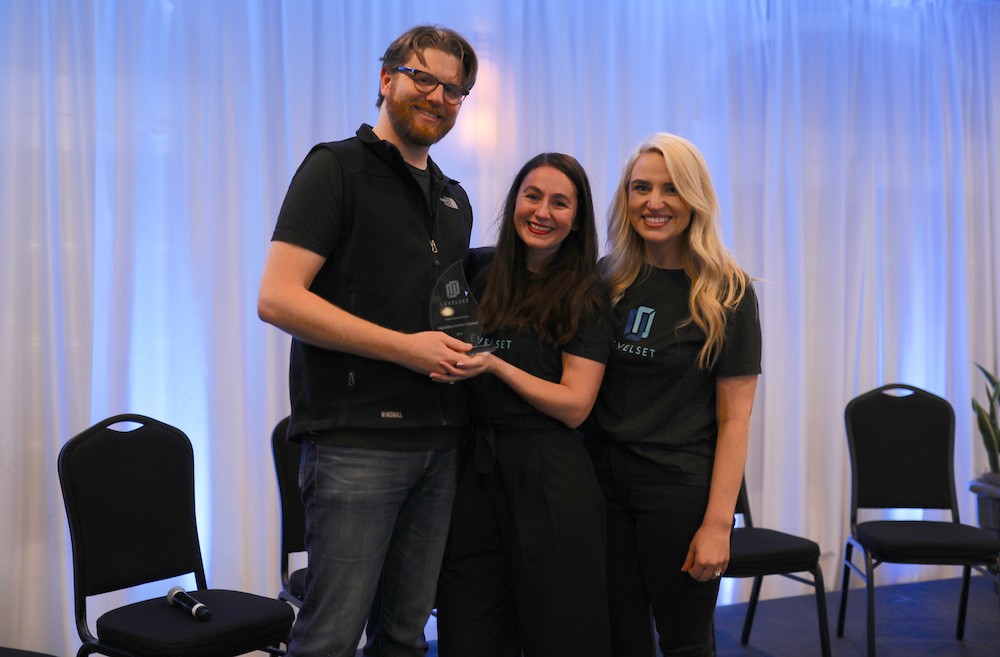
When I was CEO of a 400+ person team, we had all kinds of shoutout rituals. I wrote about our biggest ritual — the annual award — in a LinkedIn article Running The Annual Meeting To Get Your Team FEELING Right.
Now that Levelset is sold, people commonly ask me for regrets., and the #1 regret I carry is that I didn’t say “thank you” enough. Showing appreciation was always part of our annual meeting, and it always stole the show.
We would give out “Thumbs Up” across the organization each month, and then a “Thumbs Up Winner” every year. Our super talented people leaders, Jami Smith and Madeline Chizmar, came up with the idea of turning this into a “MVP” award at the annual meeting. We would name MVPs connected to each of the previous year’s Objectives.
The executive closest to the Objective would present the MVP award, which typically came with a lot of tears and a heartfelt description of the person’s contribution. And this MVP process communicated so many things at once: Appreciation to the MVP, how involved and committed our executives were, how genuine relationships were at the company, etc.; and it also re-iterated and created a reputation around the objectives themselves.
Organizations should mix the formal awards structure with informal stuff that can pop-off within the team at all times.
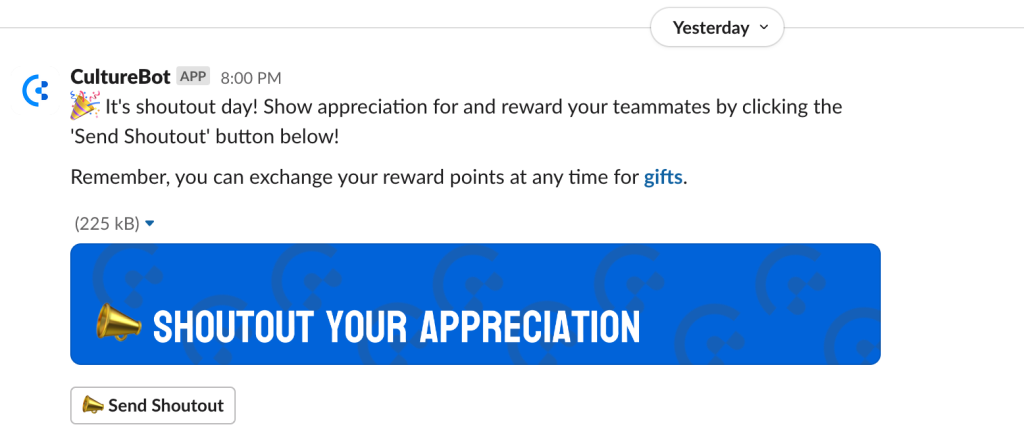
This is why using Slack/Teams to actively promote sharing praise is a must-have for companies of all sizes.
You can call it praise, kudos, or bespoke things like “thumbs up.” In CultureBot lingo, this is called “shoutouts.”
And you can create systems to remind the team to share praise on a regular basis by sending a reminder weekly or bi-weekly to a dedicated channel to drum up the praise.
Incentivize the team
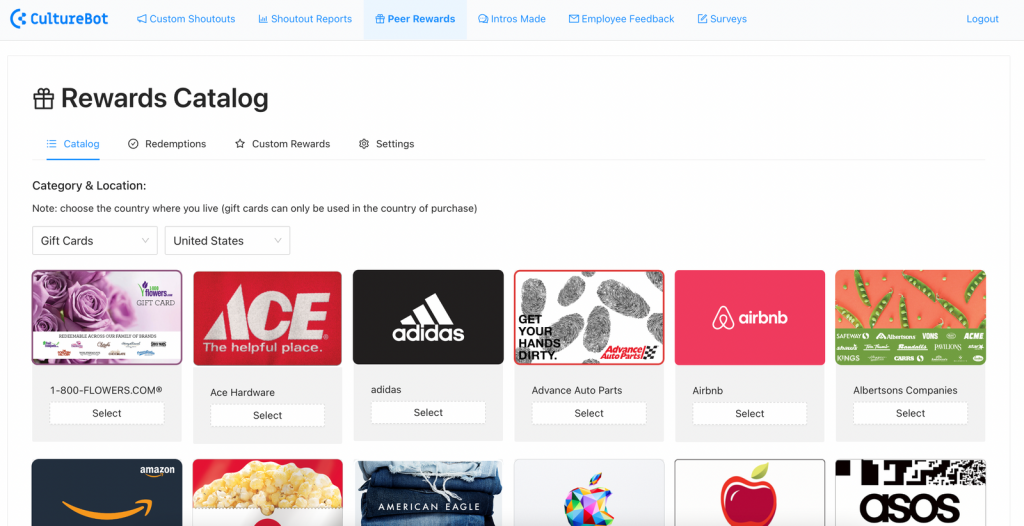
Recognition itself is a massive incentive, but put a cherry on top. Create a peer rewards system – essentially you give employees a monthly allowance of points to add onto shoutouts when they send them. As points are accrued by employees, they can go into a gifts marketplace at anytime to exchange these points for gifts.
If you’re actively using the points/peer rewards system, you can level-up again by automating the sending of points on employee’s birthdays and anniversaries. You can do that as well from inside CultureBot/Slack.
Tie It To Your Core Values (Or Goals)
Want to level-up more?
Align your shoutouts with your company’s core values or the company’s annual priorities – that way, when an employee goes to share praise with another teammate, they have to actually think about what value the other person exhibited before they send. And it reinforces and re-communicates your values or goals, both things you want to be constantly repeating and teaching in the organization.
If you’re using CultureBot, this is easy to customize (you can even swap out our default shoutout styles for your company colors, graphics, etc.).
3. Give Employees A Voice with Feedback
Being heard is never out of vogue in the workplace. Employees who feel heard are 4.6x more likely to feel empowered to do their best work.
There’s no time like the present to work on getting a system in place to systematically and regularly solicit honest feedback from your employees (better you get word of any issues or harbored resentment before it ends up on Glassdoor or somewhere else online).
Manually you can do this by sending out an anonymous survey on a monthly basis, but there is a better way – Slack or Teams!
Use pulse surveys, Slack/Teams polls, or open feedback forms.
The critical step is follow-through: acknowledge feedback, share what you learned, and explain what you’ll change (or why you won’t).
In Slack or MS Teams, you can setup regular reminders to seek feedback from the team. Teammates can submit feedback anonymously that can be privately sent to leaders, the people ops org, or anyone else. In apps like CultureBot, you can even message back and forth with the teammate who left the feedback to get the bottom of any issues or concerns they may have without either identity being revealed!
Don’t overcomplicate your surveys. A single, recurring question like “What’s one thing we could improve this week?” can unlock powerful insights.
4. Grease the Socialization Skates
A huge part of driving engagement working in today’s remote-first world is thinking about ways to replicate the more informal in-office socialization of the pre-covid era.
We like to think about this like a coin with two different sides – asynchronous socializing and synchronous socializing – both have their own distinct purposes. Let’s start with the first.
Starting Async Conversations
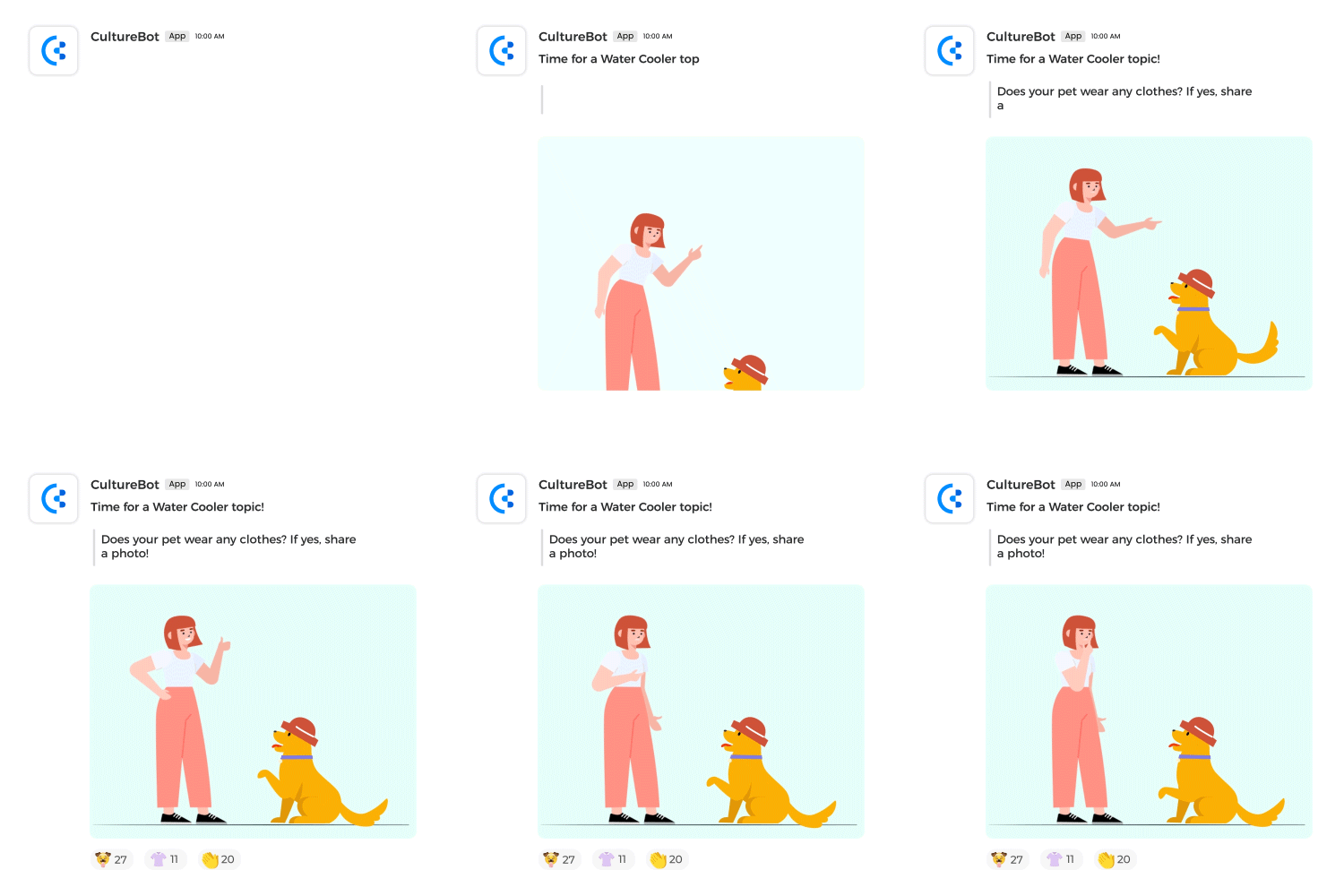
This is best thought of as the proverbial “water cooler” from the in-office days. How best to replicate this? For starters, we recommend creating/re-naming a few channels in Slack / Teams to align with common hobbies/interests your team may have. For example, you could setup a channel for travel, another for running, and a third one for Taylor Swift. You might name these #social-travel, #social-running, and #social-taylor – these give employees a clue as to what these channels are about, and whether they might want to watch them.
Next, you can automate conversation starters to “feed” into these channels once a week or even more often than that. If you are using CultureBot, that’s as easy as creating a water cooler instance (a ‘classic’ instance for the more basic topics, and then an ‘ai’ instance for the Taylor Swift conversation starters). And, that’s it! Invite the teammates you know who are interested in those topics (which you could validate by running a short questionnaire in Slack/Teams – also via CultureBot).
Enabling 1-on-1 and Group Meet-and-Greets
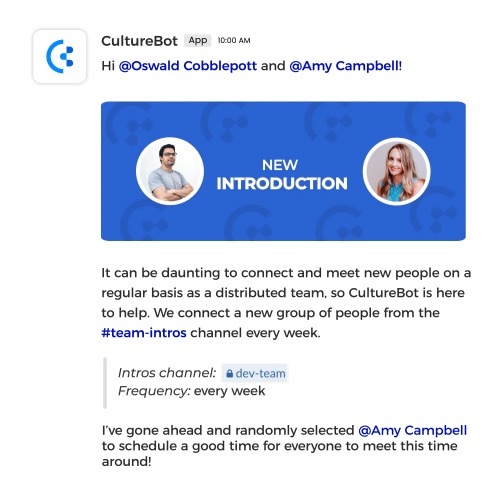
For teams that are onboarding new folks on a regular basis, it can be hard (especially in a fully remote environment) to facilitate the kind of regular social interactions that are best developed in a one-on-one setting.
It probably comes as little surprise to you, but you can also utilize Slack or MS Teams to automate this!
Open up CultureBot and select the ’employee intros’ feature. From here, create a new ‘instance’ of intros – this will then let you pick a channel, time of day, time of the week, etc. to configure your automated intro making. It’s important to highlight a few of different kinds of intro-making:
- Random 1-on-1’s: setup an intros instance with a group size of ‘2’ for this type – 2 employees at a time (who are in the same designated channel) will be introduced to each other at an interval of your choosing (e.g. weekly). This is great for new hires to meet new team members.
- Random group meetings: setup an intros instance with a group size of 3-8 for this type – 3 or more employees (who are in the same designated channel) will be introduced to each other at an interval of your choosing (e.g. weekly). This is great for more introverted departmental syncs (e.g. engineering <> another set of teammates).
- Lotteries: choose the lottery type on your instance when creating it to enable this type. This is great for CEO lotteries, where you essentially have the CEO meeting with a new person or group of teammates every week or two – great for morale and active transparency building from the top down!
5. Team Bonding & Events

Games and events are a tried-and-true way to build team connections, morale, and overall camaraderie. Although in-person events are definitely recommended whenever possible, when it’s too expensive or time is tight (as the remote world we live in continues to expand) – there are things you can do to have as close to that in-person vibe/good time as possible.
- Trivia Slack Games – start these by typing “/trivia” into any Slack channel. You can then choose from a list of Jeopardy categories, and even add your own company-specific questions as well. You can also schedule trivia out, if you’d like to use it as a scheduled pick-me-up or coffe break mid-afternoon for your team. We do suggest using it as an icebreaker to begin larger calls as well – you can simply have everyone enter a specific Slack channel, and off you go.
- Immersive Slack Games – these are started by using the “/games” command in any Slack channel. From here, you’re shown a list of games to play – these games are more engaging than your traditional geoguesser or skribble type games because they’re led by a virtual comedian and keep the full crowd equally engaged the whole time.
- 60-min Virtual Game Show – these are hour long games shows hosted by an actual live comedian. You will play a series of 10+ games over the hour long window, with the comedian engaging with random teammates as you go. Example games includes virtual escape rooms, a virtual theme park, wordplay games, seasonal games, and more.
6. Balance Work with Well-Being
Burnout kills engagement. It’s hard to care about culture when you’re exhausted. Leaders who prioritize well-being send a powerful cultural signal. So, this matters a lot because engagement and well-being are inseparable.
Promote breaks, encourage time off, and respect boundaries (no “always on” Slack culture). Recognize life events — not just work milestones.
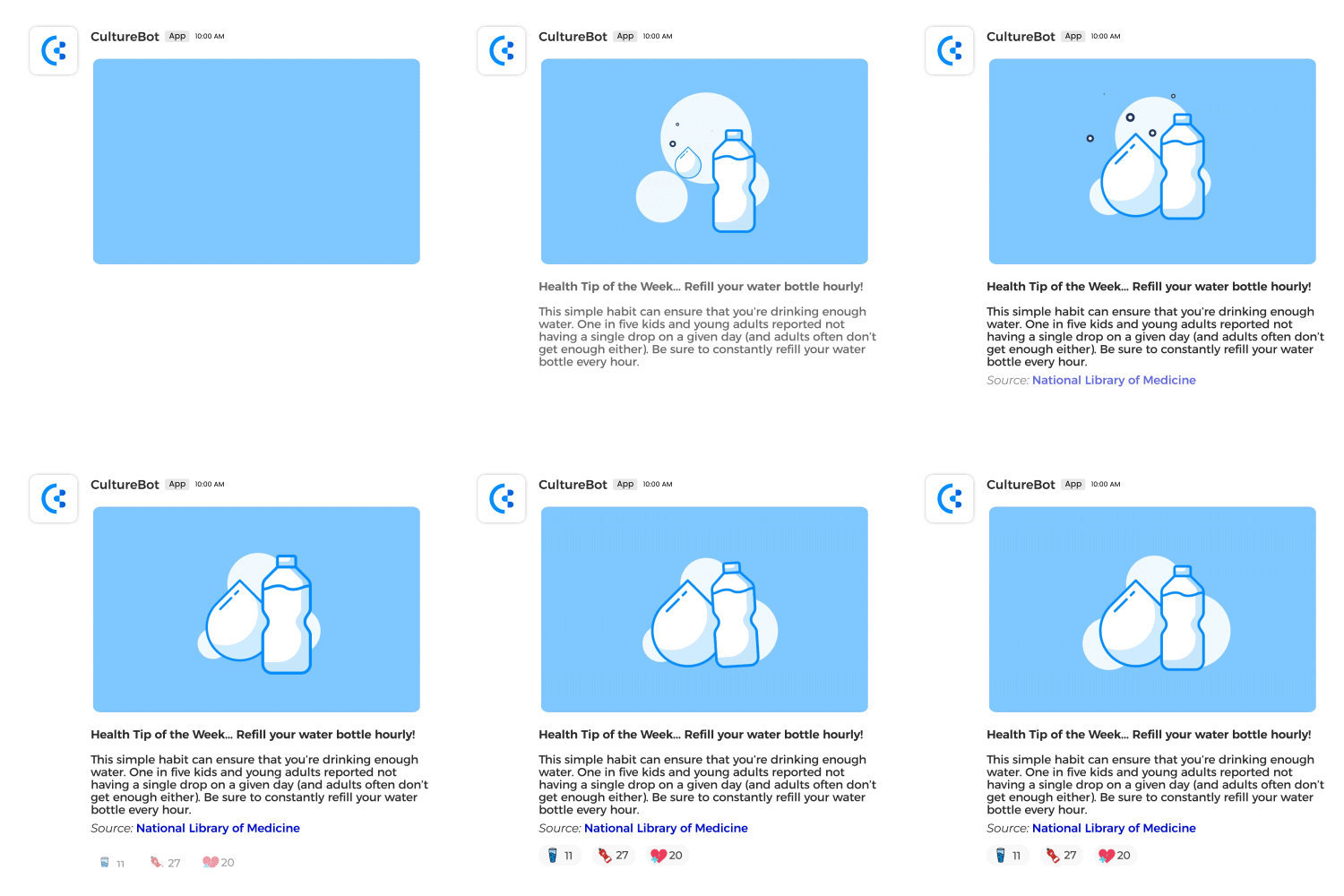
If you’re not doing any sort of wellness programming today, this is a great opportunity to start (and to show you care/are thinking about things that matter to your employees, like work:life balance, burnout, physical/mental wellness, etc.). Build wellness nudges into the workday: hydration reminders, mindfulness breaks, or encouraging messages with bots.
This is a really easy, and quick win if you have Slack or MS Teams.
Visit the ‘health tips’ section inside of CultureBot (in Slack) and setup the tips to send to your new #wellness channel at a certain time of the week. Don’t like the tips? Skip some of the presets and add your own!
7. Welcoming New Hires
With new hires, it’s easy to get caught up on the formal stuff – employment forms, HRIS setup, benefits, onboarding checklists… the list goes on. We recommend also spending some time thinking about the softer/more social side of an employee’s first day. Getting off on the right foot is important, but while it starts on day one, it’s much more than just day one (See HBR Article: How to Set Up a Remote Employee for Success on Day One)
Get them to share a little bit about themselves in a fun way!
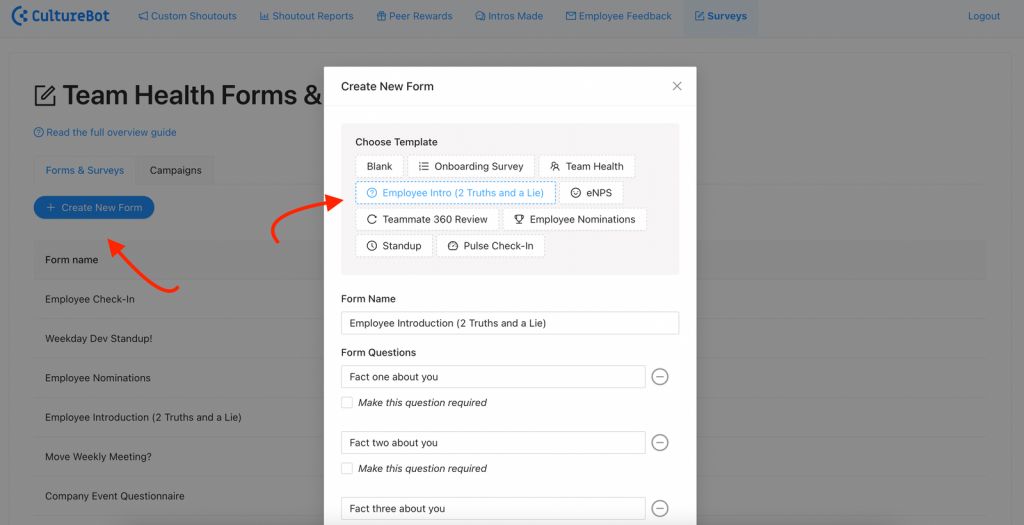
From the surveys & questionnaires feature you can setup a new form using the template ’employee intro (2 truths and a lie)’ – once you do this, go ahead and create a new campaign that is set to run at the frequency of ‘new users daily (as they join Slack)’ – what will this do? Any new hire who joins Slack for the first time will get your new 2 truths a lie survey via DM – when they respond to this survey (never leaving their DMs)
CultureBot can be set to then automatically share those answers to a public channel of your choosing. This makes it super easy to get the conversation flowing in a fun way to introduce your new hires – and, once you set it up the first time, you can set it and forget it!
Checking-In With New Hires
It’s not always bunnies and rainbows post-honeymoon period for new hires – it’s very possible (esp. in larger organizations) that a new hire might have some suggestions or feedback on how to make the onboarding process easier. Of course, it can be burdensome to collect feedback and suggestions from new hires – but it doesn’t have to be (and it really shouldn’t be – as this data is golden, and it super vital for bettering a team’s culture).
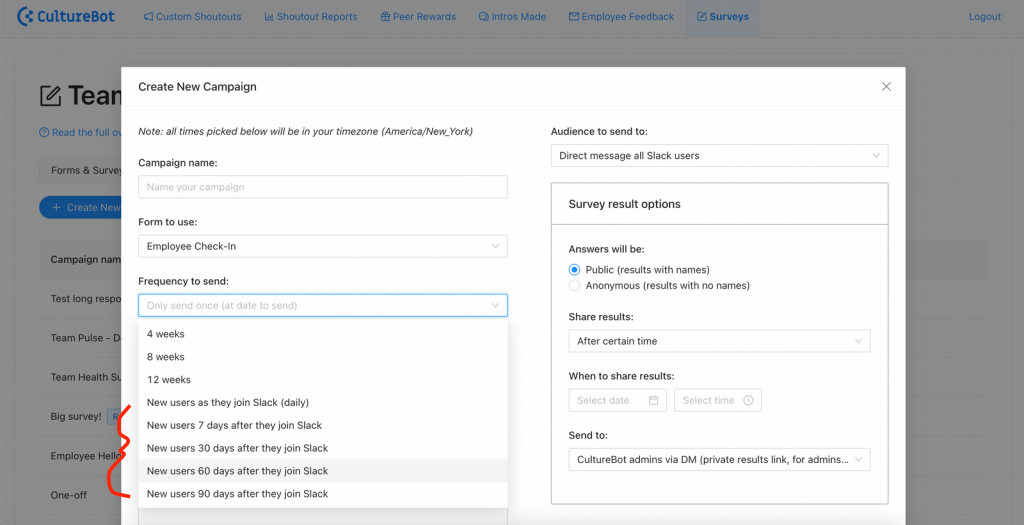
In Slack via CultureBot, setup an automated survey to send to new hires a week, a month, or more after they join. The beauty is you only need to set this up once, and then it’s sending to new hires at your desired interval automatically from there on out. You can ask new hires whatever you want in this questionnaire – but we recommend using our template ‘onboarding survey’ as a good place to start.
If you’ve setup the results to send automatically (we suggest doing so), they’ll then send to you via DM in Slack (and anyone else you designate) automatically – now you’ve got a fully automated feedback mechanism for collecting onboarding thoughts from your new employees!
8. Communicate Internally Like A Marketer
Internal communication is often the weakest link in engagement. Too many words, unclear messages, no reinforcement. Employees tune out.
Clarity and repetition drive alignment
Treat internal comms like external marketing: short, clear, frequent, and repeated in different channels. Use Slack/Teams for quick updates, but also layer in visuals, storytelling, and campaigns.
If no one reads your all-hands memo, you don’t have an engagement problem — you have a communication problem.
9. Measure Engagement As You Go
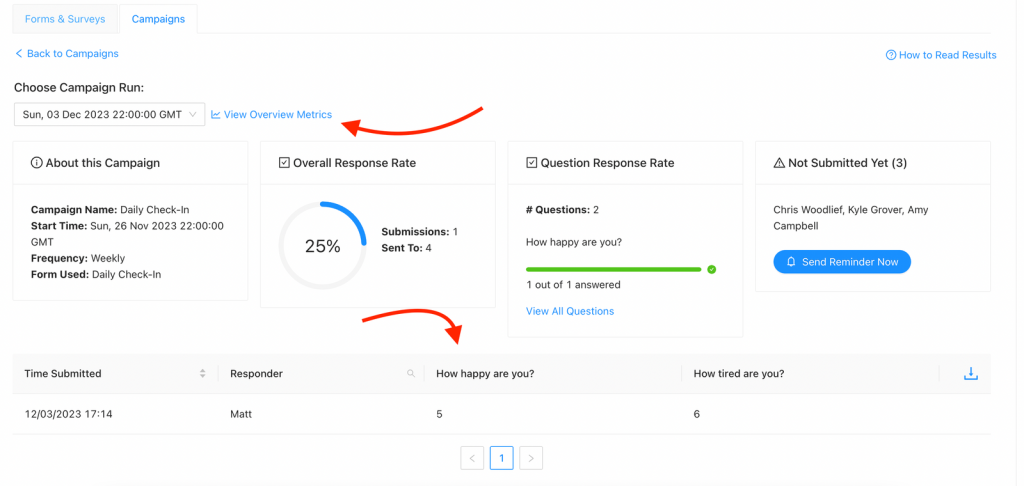
You can’t improve what you don’t measure. Engagement should be tracked with the same rigor as financials or customer metrics.
Assessing your team’s health shouldn’t be an afterthought (and it also shouldn’t be laborious, either).
There are solutions to make this very straightforward, especially if you’re using Slack.
The end result? You can have a fully automated “pulse check” going out to your team on a monthly (or quarterly) basis to gauge how they’re doing. Employees will receive a simple questionnaire in their Slack or Teams DMs (CultureBot can even follow up automatically with those who don’t reply the first time) and when they respond you’ll start to see results fill up in the reporting section of the campaign inside the CultureBot web portal.
This allows you to quickly report back to leadership on a verifiable, and quantifiable measure of how the team morale is doing – proof that your employee engagement strategies and tactics over the course of the year are paying dividends in terms or retaining key personnel!
Don’t chase vanity metrics. Focus on outcomes: Are employees staying longer? Do they feel more connected? Is productivity rising?
Timeless Engagement Principles (From Leaders Who’ve Been There)
Tactics are powerful — celebrations, shoutouts, surveys, and all the rituals we’ve covered can transform engagement in any team. But the best cultures don’t just run on tactics. They run on principles.
When you look at companies that have scaled culture successfully — Netflix, GitLab, Pinterest, and others — there are consistent patterns. Leaders at these companies didn’t just implement tools; they anchored their engagement strategies in principles that shaped how people behaved, led, and connected.
This section distills some of those timeless practices — the kind you can adopt no matter your industry or team size. Think of them as the keystone habits that hold the rest of your engagement strategy together.
Empower Your Culture Carriers
Every company has them — the people who live and breathe the culture, the ones others naturally look to for energy, reassurance, or clarity. Too often, leaders ignore these carriers or treat culture as something that flows only top-down. Big mistake.
Empowered culture carriers make your rituals real. They amplify recognition, reinforce values, and set the tone for how others show up. Find them, recognize them, and put them in positions where they can model the behaviors you want the rest of the team to adopt. Culture isn’t a poster on the wall; it’s the people who embody it daily.

Culture can organically happen and develop itself, but you need people actively thinking about it and talking about it on a regular basis
Leslie Kincaid-Lawrence, Pinterest’s Workplace Operations Specialist, led the “Culture Club” at Pinterest, made up of team members from Pinterest offices all across the globe. I love her quote here, “you need people actively thinking about culture and talking about it on a regular basis.”
We employed this exact strategy at Levelset when I was CEO there. We created a group called “Franchise Players” and very intentionally brought those people together and empowered them to be a cultivator of our culture.
Communicate Mission & Values Ad Nauseam
If you’re tired of saying it, your team is just starting to hear it. Leaders underestimate how many times you have to repeat mission, strategy, and values before they actually stick.
This isn’t about buzzwords on the website. It’s about weaving context into everything: why we’re building this product, why this metric matters, why this decision is the right one. Employees disengage not because they don’t care, but because they don’t understand. Repetition creates clarity, and clarity creates engagement.

Reinforce our values as many ways as possible. Many companies say their values are important to them…but then you ask, how many ways do you reinforce them. At Gitlab, we have 22 ways we reinforce them.
Sid Sijbrandij, Giblab Founder, says that communicating and upholding your company values is one of the most important things you can do to build a positive remote work culture.
In case you don’t know, Gitlab is the world’s largest all-remote company.
As Sid will emphasize, “culture” is more than just fun company events, ping pong tables, and all hands meetings. It’s what people do when their peers and managers aren’t looking. It’s how people act when things are at their most challenging. Something that remote teams learn faster than predominantly in-person teams is that your culture has to be built around a strong mission and values that unite the team.
Think about your company values and mission like you think about brushing your teeth – do it early and often. Where? During lunch and learns, during retreats, during end of the week stand ups. But why stop there? Encourage the folks on your team to share the values they see being upheld and championed across your team right when they see it (Can you say, SHOUTOUTS?). This can be extremely rewarding and appreciated by the team member who is given the shoutout, and will surely make them feel like the work they do matters.
Design Rituals, Not Events
Creating ongoing rituals (weekly shoutouts, monthly “what went well,” etc.) matters more than one-off events. Rituals build connection because they become predictable, familiar, and something people look forward to.

“Culture is simply a shared way of doing something with a passion.”
That’s a popular and fantastic quote about culture from Brian Chesky, Airbnb’s Founder & CEO. I love the simplicity of it…a shared way of doing something.
When leadership turns engagement into ritual (versus treating it like marketing or PR), teams feel culture in their bones instead of in a memo. Rituals create reliable, authentic touch points.
Best Practices for Leaders
At the end of the day, tools and HR programs don’t drive engagement. Leaders do. Here’s what works:
- Make it a ritual, not a one-off. Engagement isn’t an event. It’s the cadence of how your team operates. Weekly shoutouts, monthly surveys, quarterly retros — consistency beats intensity.
- Lead with context. Remember Patty McCord’s point: people need to understand the business. Share numbers, strategy, and decisions openly. Employees don’t disengage because they don’t care — they disengage because they don’t see the why.
- Share the load. Don’t outsource culture to HR. Managers should own engagement in their teams. Executives should model it company-wide. HR should enable it, not carry it alone.
- Celebrate visibly. Recognition isn’t effective in private. A Slack message, a team callout, or a company-wide shout goes further than you think.
- Check in with intent. Ask more than “How’s it going?” Use engagement questions and pulse surveys to really understand where your team stands.
Leaders who build engagement into their leadership DNA don’t just have happier teams. They have more productive, more resilient, and more loyal ones.
Here’s the truth: engagement isn’t built in one grand gesture. It’s built in small, repeated actions that make employees feel valued, connected, and heard.
If you do nothing else, start with three habits:
- Celebrate milestones consistently.
- Recognize people publicly.
- Listen and act on feedback.
From there, layer in rituals, manager training, and stronger communication. Over time, these strategies compound into a culture where people don’t just work — they belong.
Why CultureBot Exists
Employee engagement isn’t a fluffy HR metric. It’s the heartbeat of a company. In a remote and hybrid world, where connection doesn’t happen by accident, leaders have to be deliberate.
The playbook is clear:
- celebrate people,
- connect teammates, and
- communicate with context.
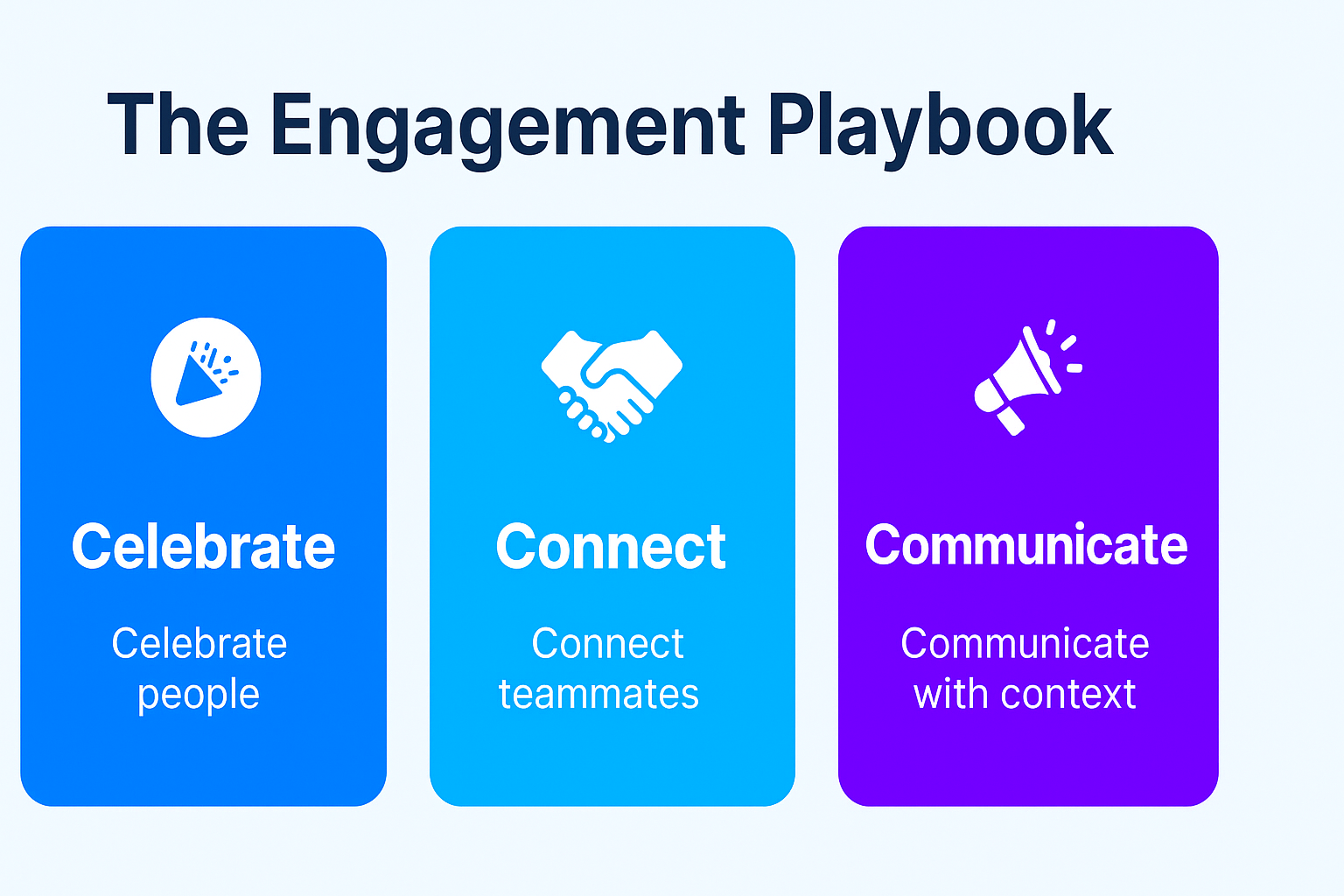
Do this consistently and authentically, and you’ll see the payoff in productivity, retention, and culture strength. Ignore it, and you’ll see the opposite — quiet quitting, turnover, and a culture that slowly erodes.
That’s where CultureBot comes in.
CultureBot makes engagement easy and natural inside Slack and Teams. From birthdays and work anniversaries, to shoutouts, water cooler prompts, surveys, and even AI-powered context — it takes the work out of building rituals that stick.
👉 If you want to make employee engagement part of your team’s everyday flow, not just another HR initiative, try CultureBot free.