In the modern workplace, we are drowning in digital “pats on the back.” We have Slack emojis, LinkedIn recommendations, and the occasional “Kudos” in a Zoom meeting. But when was the last time an employee kept a screenshot of a Slack message for five years?
So much corporate recognition ends up feeling routine or flat. LinkedIn recommendations are the worst offenders, they’re “businessy,” out of context, and read like a bland letter of recommendation from a college professor. They lack the essence of the work and the grit of the relationship.
At my previous company, Levelset, we stumbled upon a tradition that solved this. We called them Handygrams. And years later, people who have long since moved on still have those physical cards tucked into their notebooks or pinned to their home office walls.
What is a Handygram?
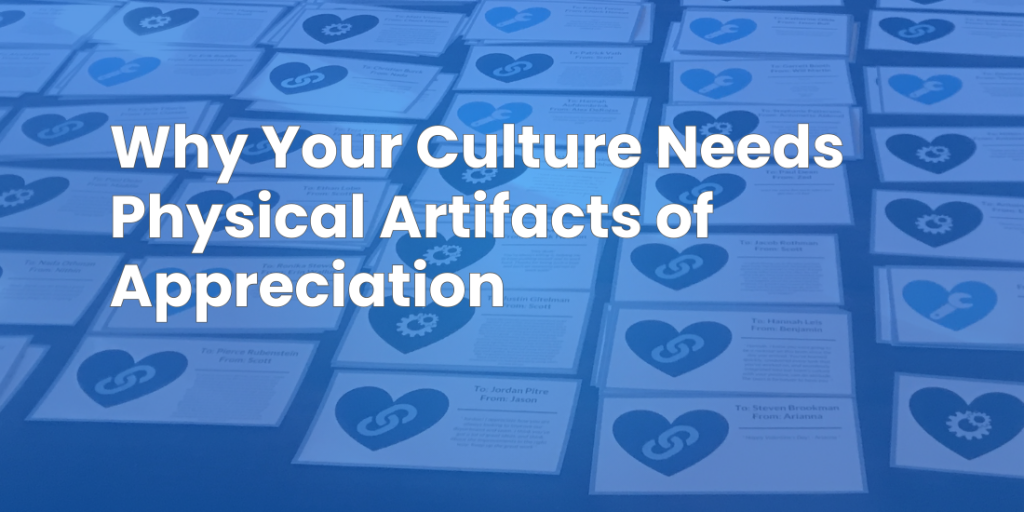
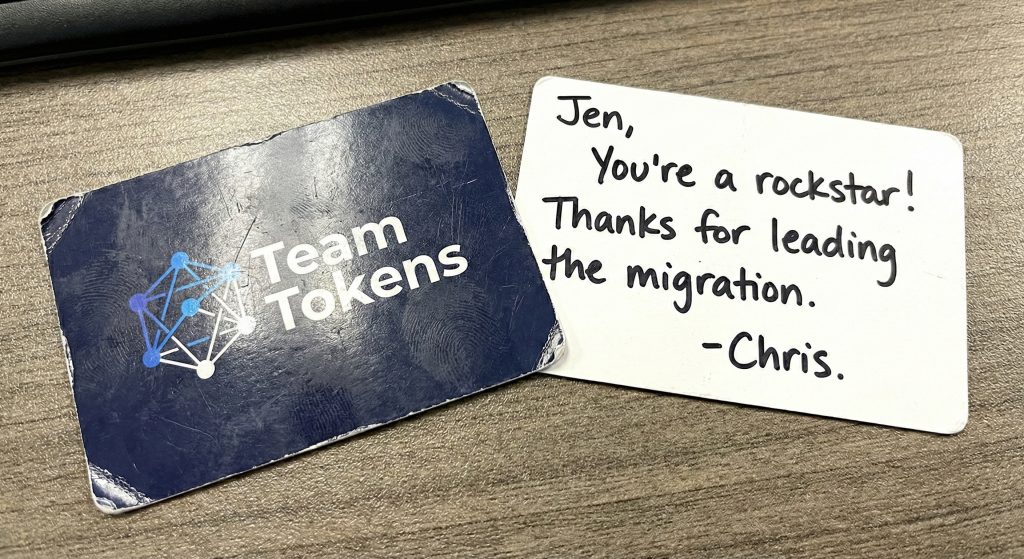
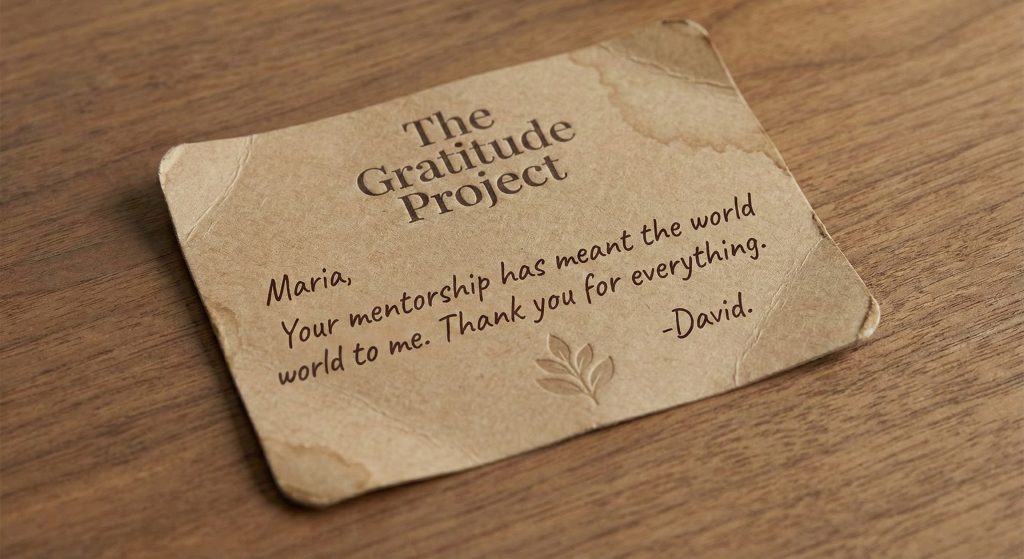
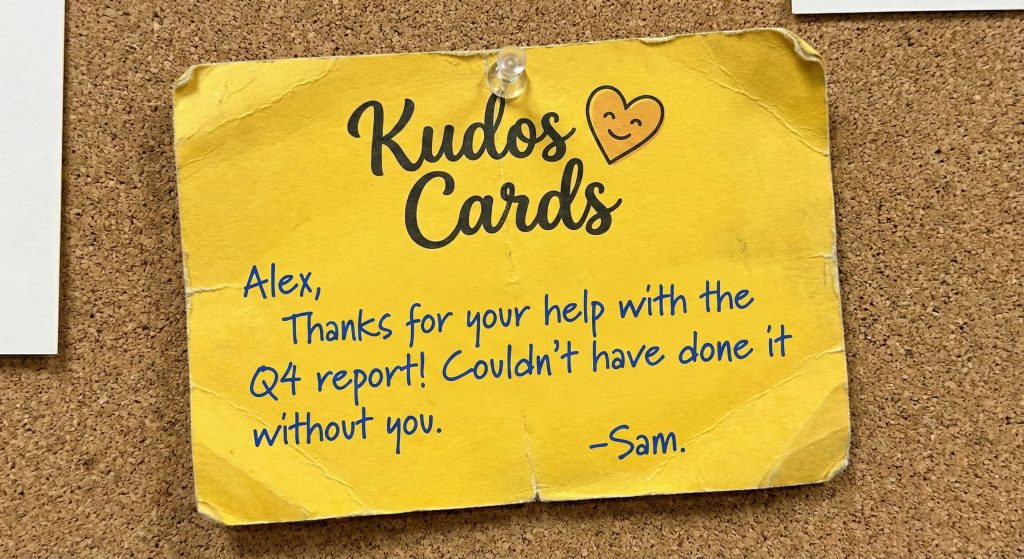
A Handygram is a physical card delivered to an employee, containing a specific note of appreciation, a shared inside joke, or a vulnerable moment of gratitude from a colleague.
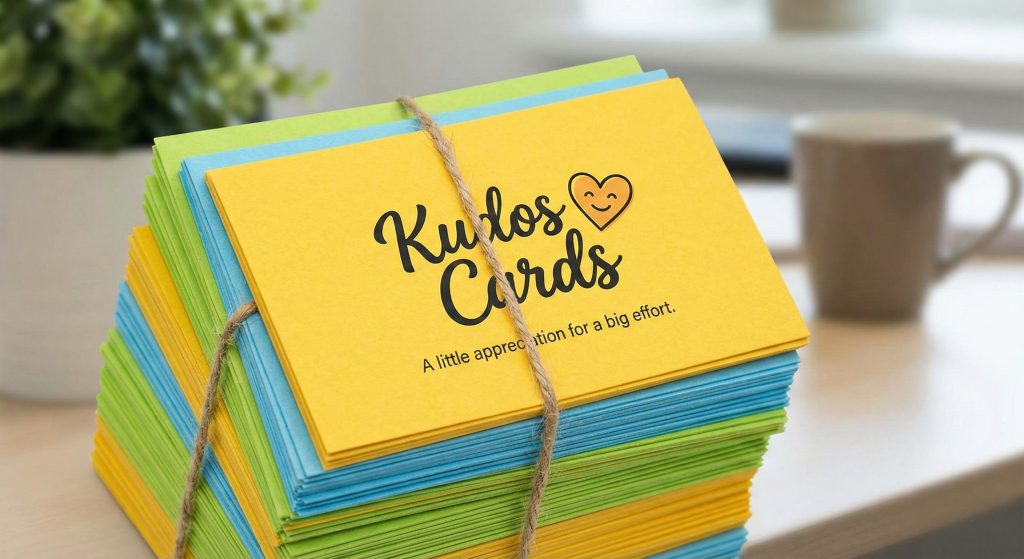
While we used the name “Handygrams” because we were in the construction tech space, the concept is universal. If you aren’t in construction, you might call them:
- CultureCards
- ImpactNotes
- Heart-to-Hearts
- The Appreciation Archive
The Anatomy of an Artifact: Why They Stick
Why did these mean more than a digital shout-out? It comes down to three things:
- Intentionality: You can’t just “click” a Handygram. You have to sit down, think about your relationship with that person (whether they are your boss, a peer in another department, or a direct report) and record something meaningful.
- The Mix of Vulnerability and Humor: Because these were private notes printed onto cards, people felt safe being real. Some notes were deeply moving expressions of support during a hard project; others were hilarious inside jokes that only two people in the warehouse would understand.
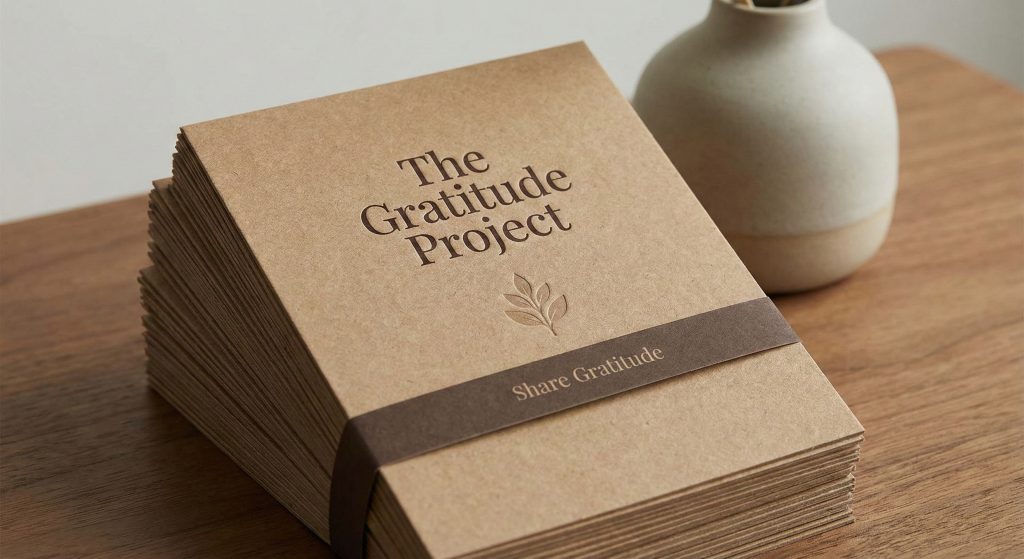
- Physicality: In a world of pixels, paper matters. HR would export these from a Google Form, print them onto high-quality cardstock, and deliver them by hand on Valentine’s Day.
How to Build Your Own “Handygram” Program
For HR leaders and CEOs looking to build an intentional culture, this is one of the highest-ROI things you can do. It costs almost nothing but provides a massive boost to “relational wealth” within the company.
| Step | Action |
| 1. The Launch | Great engagement starts with great messaging. Build excitement and interest with a message that comes from you, or even better, the CEO, that explains the “why” behind the initiative, sets the submission deadline, and shares the link to your collection form. |
| 2. The Collection | Set up a simple Google Form or Typeform. Ask for: Sender Name, Recipient Name, and the Message. Keep the form open for 7–14 days. Send frequent reminders to get engagement and build expectation. |
| 3. The Production | Export the data. Have your team format these into printable templates, or see our recommendations below for how to get it done for you. |
| 4. The Delivery | Deliver them physically to desks (or mail them to remote employees), and make a moment out of it! Announce when they’re going out, and get the team excited with anticipation. |
The Handygram Blueprint: From Google Form to Front Door
To make this work, you need to remove the friction for your employees. Here is the exact workflow to move these notes from a digital form to a physical artifact.
1. The Launch
Great engagement starts with great messaging. Build excitement and interest with a message that comes from you, or even better, the CEO, that explains the “why” behind the initiative, sets the submission deadline, and shares the link to your collection form. Here’s an example:
Hi Team,
We spend a lot of time together. We crush deadlines, we solve problems, and we send a lot of Slack messages. But in the rush of the workday, the most important things often go unsaid.
We want to change that.
Today, we’re launching Handygrams [or insert your chosen name].
What is a Handygram? It’s a physical card featuring a personal note of appreciation from you to a colleague. It’s not a “LinkedIn recommendation” or a formal performance review. It’s a moment to be real, be funny, or be vulnerable.
How it works:
- Fill out this form: [Link to Google Form] by [Date/Time].
- The Prompt: Share an inside joke, a memory of a project that bonded you, or simply tell someone why you’re glad they’re on your team.
- The Delivery: Our People Ops team will print these onto physical cards and deliver them to everyone’s [desk/mailbox] by Valentine’s Day.
Don’t overthink it. Some of the best Handygrams are just two sentences long.
- “To the person who kept me sane during the Q3 audit. I literally couldn’t have done it without your coffee runs and your spreadsheets.”
- “I’m still laughing about that accidental screen share from October. Thanks for being the best desk-mate I’ve ever had.”
Whether you’ve been here five years or five days, I encourage you to take 10 minutes today to send a few. These cards often become the things we keep long after the projects are over.
Let’s make someone’s day.
Best,
[Name]
2. The Collection: The “Soulful” Google Form
Don’t just ask for “To, From, and Message.” You need to set the tone. If you ask for a “shout-out,” you’ll get “Thanks for the help on the deck.” If you ask for a Handygram, you’ll get a memory.
What to include in your Form Header:
The Goal: Handygrams aren’t just “Feedback.” They are a moment to share the things we often forget to say in the rush of the workday.
The Vibe: Be vulnerable. Be funny. Use that inside joke from the Q3 offsite. Tell someone how their calm attitude during a product launch saved your sanity. Whether it’s a deep “thank you” or a hilarious “remember when,” make it count.
Prompts to get you started:
- “I don’t think I ever told you, but when you said [X] in that meeting, it really changed how I thought about…”
- “Thank you for being the person I can always Slack when a client is being difficult.”
- “To the person who keeps the best snacks in their desk: you are the real MVP.”
- “Working with you on [Project Name] was the highlight of my year because…”
Click here to make a copy of the Handygram Collection Template
Once copied, you’ll be the owner of the new form and can customize the questions and branding for your own team.
3. The Production: Turning Data into Design
Once the form closes, you’ll have a spreadsheet full of gold. Now, you need to turn those rows into cards. While you can certainly print these on a local office printer and hand-cut them, that’s a lot of “HR manual labor.”
For a more professional, automated approach, here are three services that allow you to import data (usually via CSV) and ship cards in batches:
Handwrytten (Best for Authenticity)
If you want these to look like they were actually written by hand, Handwrytten uses actual robots with pens. You can upload your CSV of messages, choose a card style, and they will “write” and mail them for you. It feels incredibly personal.
Moo.com (Best for Design & Quality)
Moo is famous for their high-end cardstock. Their “Printfinity” feature allows you to have a different design or message on every single card in a pack. You can design a beautiful “Handygram” brand on the front and use their platform to merge your spreadsheet data onto the back.
Postable (Best for Bulk Automation)
Postable is built for exactly this. You upload your spreadsheet of names, addresses, and messages, and they handle the printing, stuffing, stamping, and mailing. It’s the “set it and forget it” option for a busy People Ops team.
4. The Delivery: The “Unboxing” Moment
If your team is in-office, there is something magical about a physical “delivery day.” Have the HR team go around with a basket (or a mail cart) and drop them on desks.
Pro-Tip for Remote Teams: If your team is distributed, use a service like Postable to mail them directly to employees’ homes. Getting a “Handygram” in your actual physical mailbox is a powerful way to bridge the distance and make a remote employee feel like they are part of the “physical” office culture.
Why this beats the “Automated Kudos” bot
We live in a world of Slack integrations that automatically post “Great job!” to a public channel. Those are fine for quick wins, but they are ephemeral. They disappear into the scroll.
A Handygram is an artifact. By moving the appreciation from a screen to a physical card, you’re telling the employee: “This sentiment was worth the paper it’s printed on.” That is how you build a culture people don’t want to leave.
The Long-Tail ROI: The “Departure Test”
The true test of a culture initiative is what stays with an employee when they leave.
I’ve seen dozens of former colleagues mention their Handygrams years after leaving the company. They are artifacts of a time when they felt seen, known, and appreciated. You can’t get that from a LinkedIn notification. You get that from a culture that creates space for people to be human with one another.
Final Thoughts for People Leaders
If you want to move the needle on engagement, stop looking for more “software” and start looking for more “soul.” Whether you call them Handygrams, Happy Grams, or Culture Cards, the goal is the same: Make appreciation tangible.