New employees are brimming with potential and onboarding is one of the most critical moments in the employee lifecycle. Get it right!
For new hires, the first few weeks shape their impression of the company and determine how quickly they connect to the culture, their role, and their colleagues. For HR and People Ops leaders, onboarding is both an opportunity and a risk: executed well, it increases retention and productivity; done poorly, it can undermine engagement and accelerate turnover.

In today’s remote and hybrid workplaces, onboarding carries even more weight. Without in-person interactions, teams need to be intentional about how they welcome and support new hires.
I came to deeply appreciate onboarding after going through many different fast-paced scaling periods at Levelset as its People Ops leader. In its growth to 400+ people, we were rapidly scaling people at headquarters, at a remote office across the globe, and in hybrid environments. And we did it in “normal times” and in the throes of COVID-19. Onboarding was the #1, highest-value, and most critical part of getting new team members integrated it the team, “belonging” with the group, and most importantly, having extraordinary context about and feeling a shared fate around the company’s mission, behaviors, and goals.
After years of designing onboarding programs at high-growth companies, I’ve seen what works — and what doesn’t. This guide brings together five essential practices to get it right.
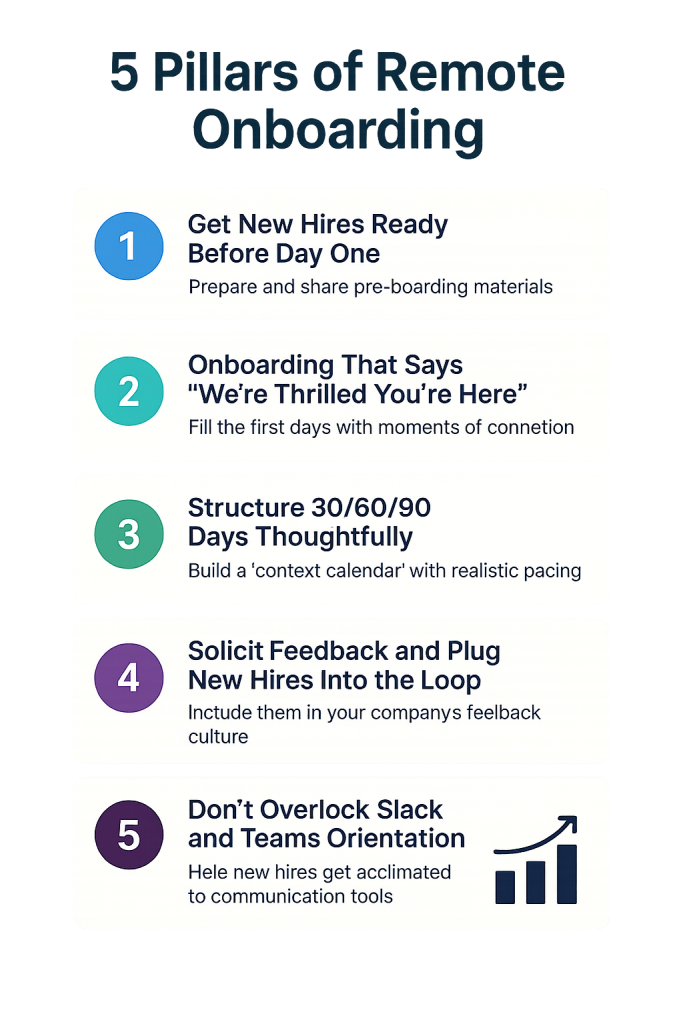
Get New Hires Ready for Connection Before Day One
An ounce of preparation is worth a pound of cure. Too often, companies improvise the pre-boarding process, leaving new hires waiting for logins and wondering what to expect. The best teams have a plan ready to go.
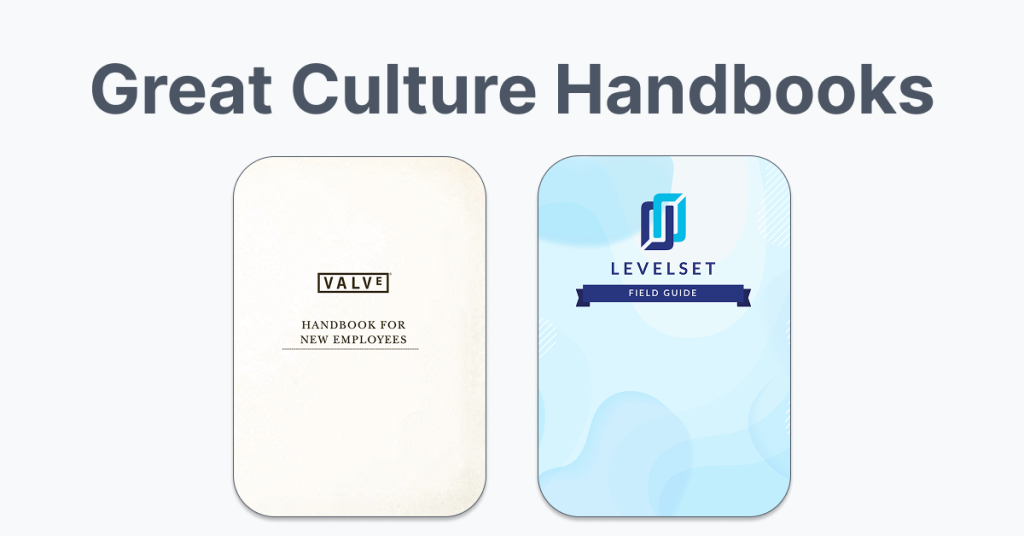
Distill what matters most about your company — mission, behaviors, goals — and present it in polished, digestible ways. Don’t overwhelm. Focus on a handful of core messages and repeat them in multiple formats: a welcome email, a short video, a team FAQ, a downloadable handbook. At Levelset, we called ours The Field Guide — less about policies, more about “who we are” and “how we work.” A very famous example of this was the viral Netflix Culture Deck.
Download Free 2 Great Culture Handbook Examples from Levelset and Valve.
Create materials that apply at three levels:
- The company as a whole
- The team they’re joining
- The role itself
When everything is ready in advance, new hires enter with confidence instead of confusion.
Onboarding That Says “We’re Thrilled You’re Here!”
Day one should be about connection. Nothing communicates “you matter” more than time on people’s calendars. Fill the first days with structured introductions:
- Their manager and adjacent leaders
- Teammates they’ll work with daily
- Executives and culture carriers
- Colleagues outside their department who can provide useful context
Help them find their “tribe” early by pointing them toward ERGs, affinity groups, or interest-based Slack channels. Don’t just connect them to people — connect them to the mission. Share stories about customers, wins, or company traditions that bring culture to life.
Small touches, like a personal welcome message from leadership or a buddy program, can replace first-day nerves with excitement.
Structure 30/60/90 Days Thoughtfully
Onboarding doesn’t end after week one. The best programs stretch across 90 days, layering in context over time rather than dumping everything up front.
Build a “context calendar.” Ask yourself: What are the five most important things I want this person to understand about our business and culture? Then spread those across 30, 60, and 90 days. These are your “context rocks” — foundational lessons reinforced through meetings, projects, or rituals.
This pacing keeps new hires engaged, prevents overload, and ensures they leave the onboarding period with clarity about both their role and the company’s direction.
Solicit Feedback and Plug New Hires Into The Loop
Onboarding should never be one-way. New hires bring fresh eyes and valuable perspectives — don’t waste them.
Introduce them to your company’s feedback culture early. Share how pulse surveys or engagement checks work, and encourage participation. Layer in personal check-ins: a quick manager conversation, a mid-point HR survey, maybe even a note from the CEO asking for candid input. These small gestures show that feedback is valued from the very beginning.
By listening early and often, you not only improve the onboarding process but also build trust in your company’s feedback loop.
Don’t Overlook Slack or MS Teams Orientation
Collaboration tools like Slack or Teams are deceptively complex. For a new hire, figuring out where to post, how threads work, or which emoji signals what can be overwhelming.
Make communication onboarding explicit:
- Share etiquette guidelines (threads, DMs, channel norms)
- Provide a “channel map” or short Slack/Teams tour
- Add them to culture channels and key social spaces
- Incentivize participation with shoutouts or fun prompts
These small steps prevent confusion and accelerate integration into the company’s digital culture.
Conclusion
Remote onboarding is about more than logistics. It’s about making new hires feel prepared, connected, and valued from the start. When companies invest in pre-boarding, build meaningful first-day connections, structure the first 90 days, listen actively, and guide employees into their communication tools, they create an environment where people thrive.
The payoff is real: higher retention, faster productivity, and stronger culture. Onboarding done right isn’t just an HR function — it’s one of the most powerful levers for long-term success.