Why are so many employees suffering at work—and what can leaders do about it?
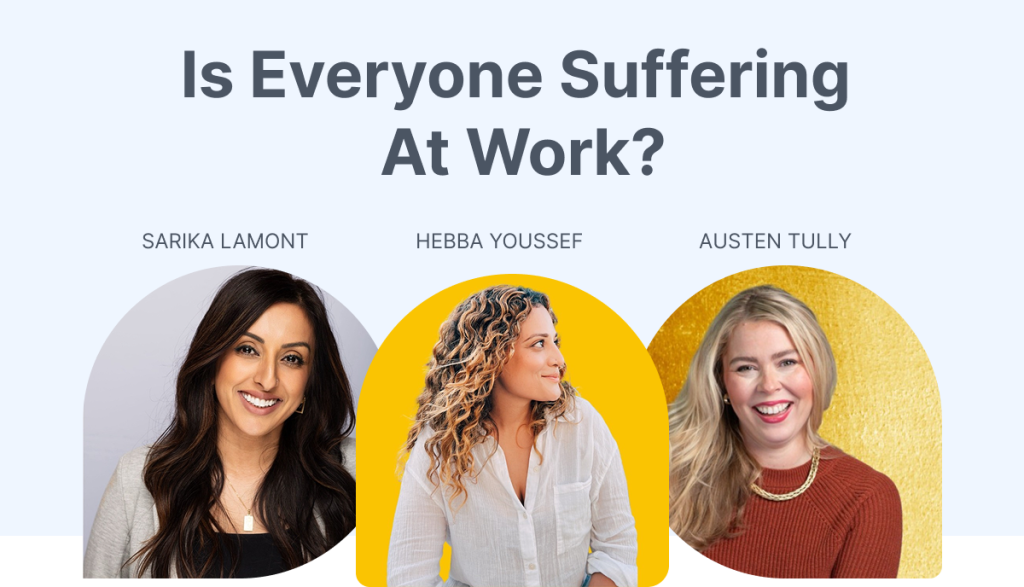
That’s the question we posed during our live roundtable event, Is Everyone Suffering at Work? With a panel of leading People & Culture voices—Hebba Youssef, Sarika Lamont, and Austen Tully—we explored the rising challenges of loneliness, disconnection, and burnout in today’s workplace.
This conversation came at a critical moment: a recent Wall Street Journal study reported that 58% of American workers feel lonely on the job, with remote employees feeling particularly isolated.
In this live round table event, 3 people & culture leaders debate why this is happening, and what you can do about it.
3 Big Themes from the Discussion
1. Redefining Culture in Remote Work
- Remote is culture—leaders must approach it intentionally, not as a watered-down version of office life.
- Flexibility is the ultimate draw, but relationships don’t form organically online—you have to design for them.
- Manager enablement and structured rituals are essential for strong distributed cultures .
2. Combating Loneliness with Micro-Moments
- Leaders need to normalize conversations about loneliness and share their own coping strategies.
- Small, intentional actions matter: shared-interest groups, birthday celebrations, holiday rituals, shoutouts, and Slack channels all help create belonging.
- Sustainable connection comes from giving employees tools to connect on their own, not just top-down programming .
3. Fighting Meeting Fatigue
- We need to be more intentional about how we design remote work, not just how many meetings we schedule.
- Shift from “calendar tetris” to front-loaded, high-value meetings.
- Build trust and clarity so teams know how to make decisions asynchronously.
- Empower employees to understand how colleagues work and adjust collaboration accordingly.
What Employees Really Think: Connection vs. Productivity in Remote Work
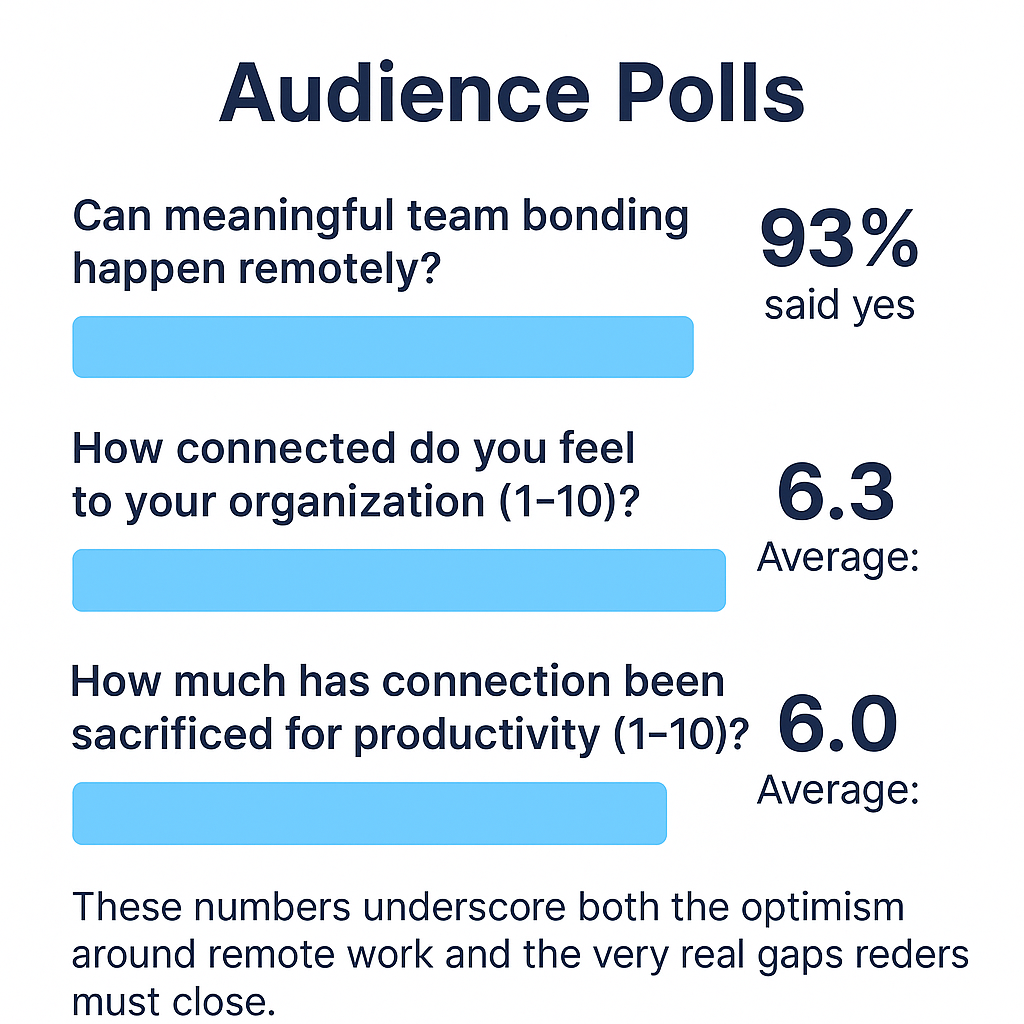
We polled the audience during our webinar to get a pulse check on how people are truly experiencing connection at work. The results painted a nuanced picture: an overwhelming 93% said they believe meaningful team bonding can happen remotely, showing optimism about the potential of distributed work.
At the same time, when asked to rate how connected they feel to their organization on a scale of 1–10, the average came in at 6.3—a passing grade, but far from excellent. This suggests that while people believe in the possibility of stronger culture, many aren’t fully experiencing it yet.
We also asked how much attendees feel connection has been sacrificed for productivity, and the average response was 6.0 out of 10.
This highlights a real trade-off: leaders may be prioritizing output at the expense of relationships and belonging.
Taken together, these numbers underscore both the optimism around remote work and the gaps leaders must close. The challenge—and opportunity—for organizations is to transform that optimism into consistent, lived experiences of connection, so that productivity and culture strengthen one another instead of competing for attention.
Why It Matters
The conversation revealed a paradox: employees want flexibility, but they’re also starved for connection. Leaders can’t ignore this tension. To build healthy, high-performing teams, we must:
- Normalize discussions about well-being and loneliness.
- Design remote cultures with the same care we once designed physical offices.
- Create micro-moments that help employees feel like they belong.
Watch the Replay
Missed the live event? You can watch the full recording here:
And don’t forget—you can also explore our Culture Matters eBook and Slack Best Practices Series for more insights.